Best AI Assistant That Works Inside the Tools You Already Use (No New App to Learn)
The best assistant, for most people, is the one they don't have to remember to open. That means it has to live where they already are.
The best AI assistant, for most people, is the one they don't have to remember to open. That means it has to live where they already are.
The wrong mental model
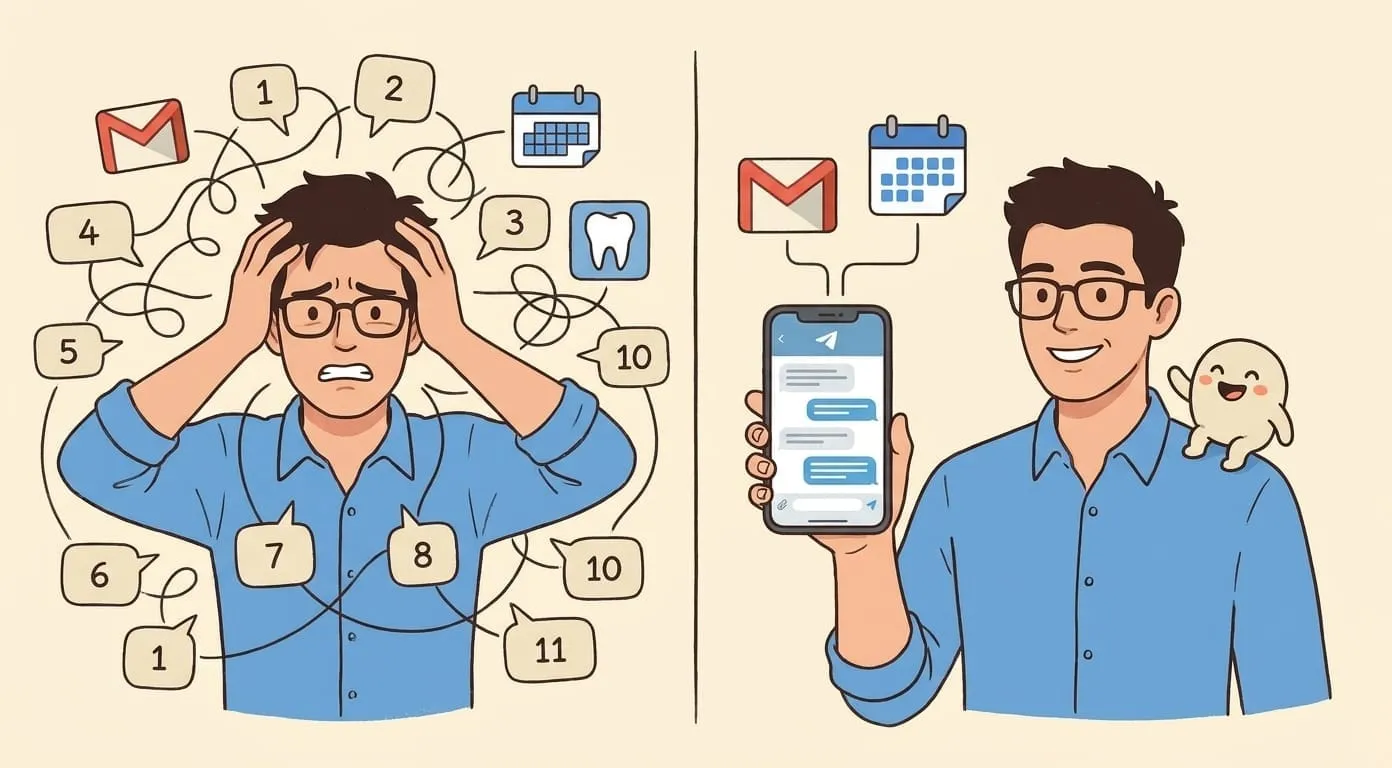
Most AI assistants in 2026 assume you'll come to them. ChatGPT wants a tab. Claude wants a tab. Gemini has an app. Even the "assistant" mode of Google Workspace pops into a sidebar you have to notice.
That works for occasional questions. It doesn't work for a tool you'd want to check every hour. The friction of opening another surface is enough to kill the habit.
What "works inside your tools" actually means
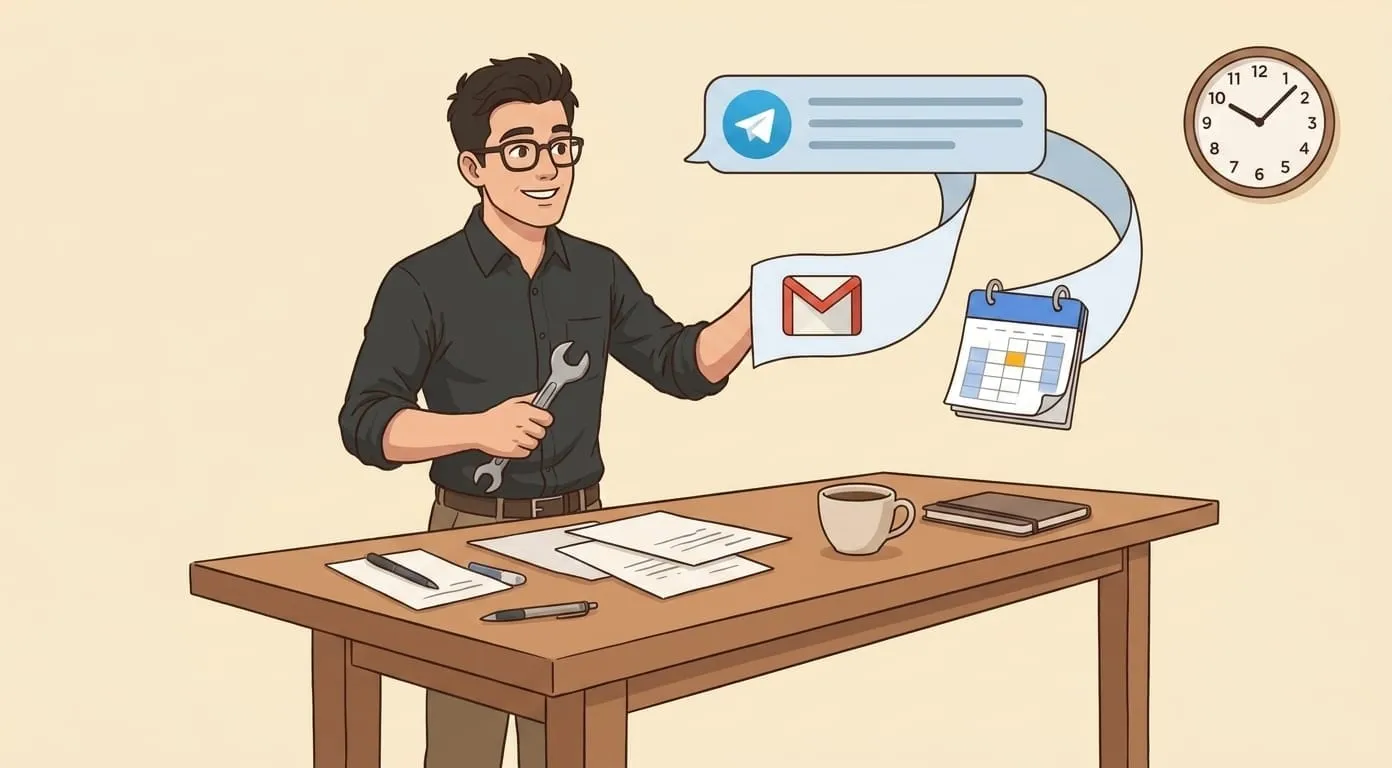
Two things, in this order:
That's the shape.
Concrete pairs
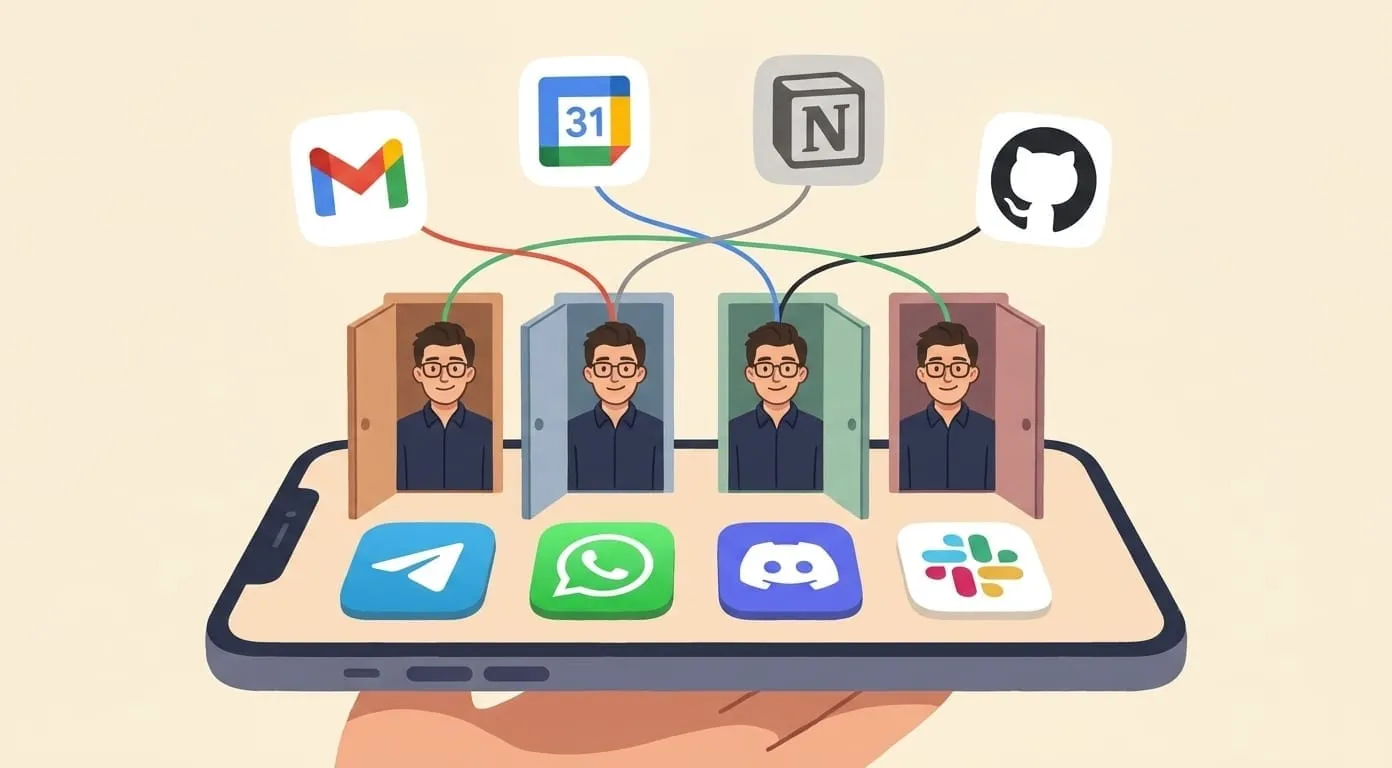
Here's what "inside your tools" looks like on real pairings:
| Messenger you use | Tool it connects to | Example ask |
|---|---|---|
| Telegram | Gmail | "Draft a reply to the last email from Jason" |
| Google Calendar | "What's my Wednesday look like?" | |
| Discord | Notion | "Add a page under Q3 planning: OKR review notes" |
| Slack | GitHub | "Summarize the open PRs in the amplify repo" |
Each of these is a single message, one reply, no new tab.
What you don't get by switching apps
Most product design assumes discovery: teach the user your interface, then they'll get value. That works when the product is the whole workflow. It fails when the product's job is to make five other workflows faster.
Every new app you install costs you:
An assistant that skips all four wins on friction alone, without having to be better feature-for-feature.
Where this doesn't apply
If you're a heavy chat-with-AI user (long back-and-forth reasoning, complex prompts, chained follow-ups), the messenger surface is a downgrade. A full ChatGPT or Claude conversation window is a better fit there. You'll want both.
If your work is entirely in one app (say, a video editor or a code IDE), you probably want an assistant that lives inside that app instead of in a messenger. Different shape, same principle. Go to the surface the user is already on.
What to look for
A short checklist if you're comparing:
Amplify hits all four. It's not the only tool that does, this is a design pattern, not a proprietary feature. But it's the pattern to look for.