How I Get a Weekly Competitor Briefing Without Lifting a Finger
A founder's setup for automated competitive intelligence using an AI agent
I used to spend my Monday mornings the same way most founders do. Coffee in one hand, phone in the other, scrolling through competitor Twitter accounts, checking if anyone updated their pricing page, skimming Hacker News and a few niche subreddits. It took about 90 minutes. Sometimes two hours if I fell down a rabbit hole. And honestly, I missed things constantly. A competitor would ship a major feature and I wouldn't notice for three weeks because it happened to drop on a week I was heads-down on a deploy.
That was about four months ago. Now I wake up on Monday, open Telegram, and there's a condensed briefing waiting for me. Pricing changes, new feature launches, interesting hires, social media posts worth reading, and a short section on industry news that actually matters. I didn't write a single line of monitoring code. I set up an Amplify agent to do it.
Let me walk you through how it works.
The problem with doing it manually
Competitive intelligence sounds fancy. In practice, for a small team, it means one person (usually the founder) trying to keep tabs on four or five competitors while also building the product, talking to users, and putting out fires. You can't hire a full-time analyst when you're a team of six. And the SaaS tools that promise automated competitor monitoring? Most of them cost $200-400/month and still require you to configure dashboards, set up alerts, and interpret the data yourself.
I tried a few of those tools. They'd send me 40 alerts a day, most of them noise. Someone at a competitor company liked a tweet? Alert. Their blog got indexed by Google? Alert. The signal-to-noise ratio was terrible, and I found myself ignoring the alerts entirely after the first week.
What I actually wanted was simple: a short, opinionated summary once a week. Not raw data. Not a firehose. Just the stuff that matters, written like a colleague would tell me over lunch.
Setting up the agent
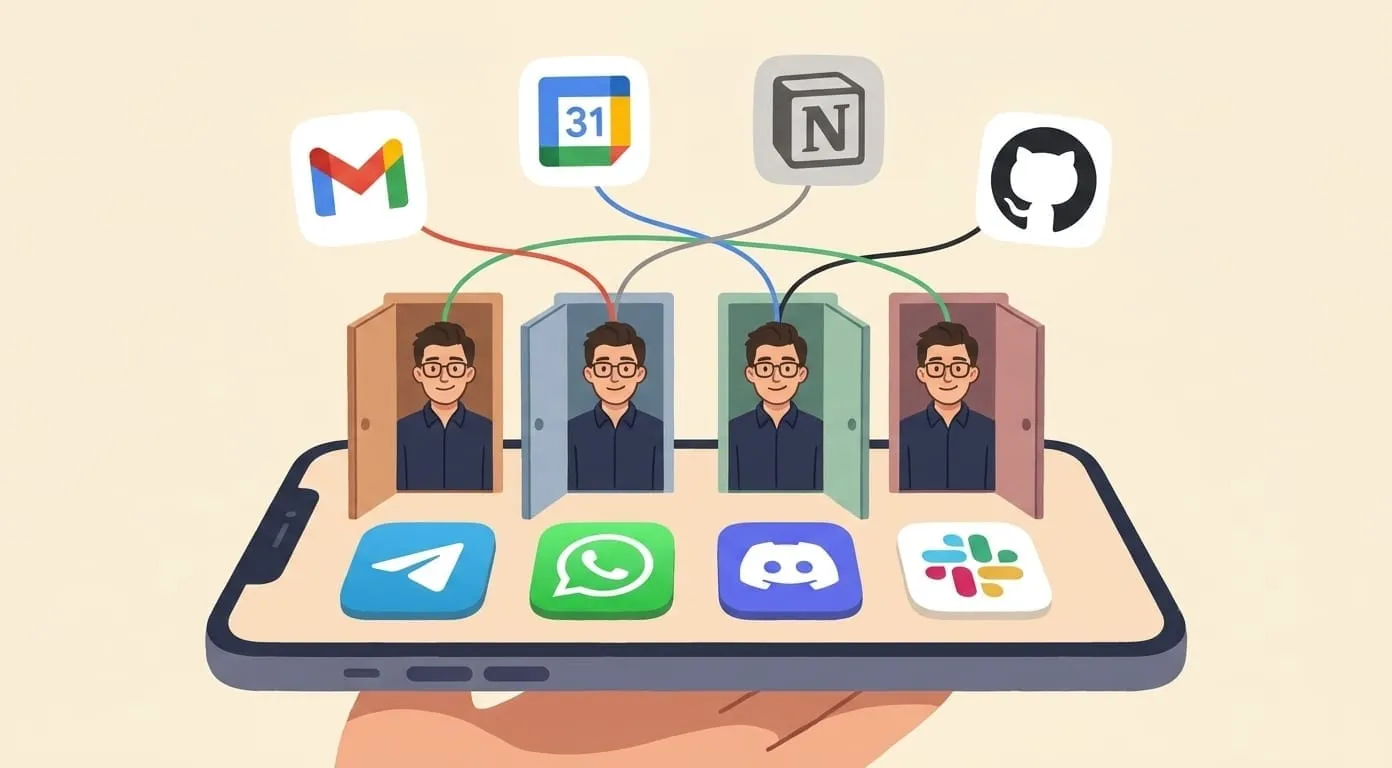
Amplify agents come with a few skills that, when combined, turn out to be exactly what I needed for this. The Tavily Web Search skill gives the agent real-time web search capabilities. Scheduled Tasks (the Cron skill) lets me set up recurring jobs. And the Morning Briefing skill handles the formatting and delivery piece.
Here's what I told my agent to do, more or less:
Every Sunday evening at 10 PM UTC, run a competitive scan. Search for recent mentions, blog posts, changelog updates, and social media activity from a list of five competitors I specified by name and domain. Look for pricing page changes. Check for new job postings that might signal a strategic shift (like suddenly hiring three ML engineers when they've been a no-code platform). Scan two or three industry news sources I care about. Then compile everything into a summary and send it to me on Telegram by Monday 8 AM.
The whole setup took maybe 15 minutes. I described what I wanted in plain language, gave it the competitor names and their domains, told it which Telegram chat to use, and set the schedule. That was it.
What the briefing actually looks like
I'll give you a real example from a few weeks ago. Names changed, but the structure is accurate.
The briefing opened with a one-line summary: "Quiet week overall, but CompetitorA dropped their starter tier and CompetitorC posted a job for a VP of Sales (first sales hire)."
Then it broke into sections. For CompetitorA, it noted the pricing change with a link to their pricing page, mentioned that their founder had posted about it on Twitter with a thread explaining the reasoning, and flagged that their changelog showed two new integrations shipped. For CompetitorB, nothing notable. The agent literally said "No significant activity this week." I appreciate that. Don't pad the report just to look busy.
For CompetitorC, it caught the VP of Sales job posting on LinkedIn and connected it to the fact that they'd also posted about closing a funding round two weeks prior (the agent remembered this from a previous briefing, thanks to its persistent memory). That's the kind of connection I'd miss doing manual scans, because I don't always remember what happened three Mondays ago.
The industry section was two paragraphs. A new regulation proposal in the EU that could affect our data processing, and a think piece from a well-known analyst that was getting traction in our niche.
Total length: about 400 words. I read it in under three minutes.
The memory piece is what makes it work
This is the part I didn't fully appreciate until a few weeks in. The agent uses Mem0, which means it has persistent memory across sessions. It remembers what it reported last week. So instead of giving me the same "CompetitorA launched feature X" for three weeks in a row, it only mentions new information.
But more than that, it builds context over time. By week six, the agent was making connections I hadn't asked for. "CompetitorB has now shipped three Slack-related features in a row, suggesting they're going after enterprise collaboration use cases." I didn't tell it to analyze trends. It just started doing that because it had enough accumulated context to notice patterns.
This is where automated competitor monitoring actually gets interesting. Static tools give you snapshots. An AI agent with memory gives you something closer to an analyst who's been following the space for months. Not perfectly, but close enough to be genuinely useful.
I should be honest here. It misses things sometimes. If a competitor announces something only in a closed Slack community or a private newsletter, the agent won't catch it because Tavily searches the public web. And occasionally it'll flag something as "notable" that's really just routine (a minor blog post update, a small UI tweak mentioned on social media). But those misses happen maybe once every three or four weeks, and the time savings more than make up for it.
What I actually changed because of the briefings
This isn't just about staying informed for its own sake. Three specific decisions came directly from competitor briefings.
First, we accelerated our Notion integration timeline by about six weeks after the agent flagged that two competitors shipped Notion integrations within a month of each other. The market was clearly moving there, and being late would have put us at a disadvantage during sales conversations.
Second, we didn't drop our starter tier. We'd been debating it internally, and then the agent showed us that CompetitorA dropped theirs and immediately got pushback on Twitter and in a Hacker News thread. Watching someone else take that hit first saved us from making the same mistake (or at least from making it without better preparation).
Third, we started paying more attention to a competitor we'd mostly ignored. The agent kept surfacing small but consistent activity from them. New hires, steady feature shipping, growing social presence. Individually, none of it seemed important. But the trend was clear, and now they're on our active watch list.
The cost of running this
One thing I like about Amplify's pricing is that it's straightforward. The subscription is $9.99/month, and then you pay for actual AI usage through wallet deposits. My competitor briefing agent does its big weekly scan on Sundays, and the web searches plus the summarization typically cost somewhere between $0.40 and $0.80 per run depending on how much there is to find. So roughly $2-3 per month for the competitive intelligence piece specifically.
Compare that to the $300/month monitoring tools I was looking at, and it's not even close.
The agent also handles other things for me throughout the week (it's not a single-purpose bot), so the $9.99 subscription gets spread across multiple use cases. But even if all it did was the Monday briefing, I'd still pay for it. Ninety minutes of my time every Monday is worth a lot more than three dollars a month.
How you could set this up yourself
If you want to try something similar, here's roughly how to think about it.
Start by writing down your actual competitors. Not the aspirational ones, the real ones your prospects mention in sales calls. Keep the list to five or fewer at first. More than that and the briefings get too long and you start skimming.
Think about what signals actually matter to you. For me, it's pricing changes, feature launches, hiring patterns, and social media posts from founders. You might care about different things. Partnership announcements, conference appearances, content marketing themes. Tell the agent what to look for in plain language.
Set the schedule based on how fast your market moves. Weekly works for most B2B SaaS. If you're in a market where things shift daily (crypto, breaking news), you might want it more frequently. The Cron skill supports any schedule you need.
Pick your delivery channel. I use Telegram because that's where I already am in the morning. You could use Discord, WhatsApp, or Slack. The agent delivers wherever you want it.
And then just let it run. The first briefing will be decent. By the third or fourth week, once the agent has built up memory of what it's already reported and what your market looks like, the briefings get noticeably better. That's when the AI competitive intelligence angle really starts to pay off.
Stuff I'd still improve
I want the agent to also monitor competitor app store reviews (both Google Play and the App Store). Right now it catches mentions on the web, but app reviews are a goldmine for understanding where competitors are falling short. I haven't set this up yet because the reviews aren't always easily searchable via web, but I'm working on a workflow for it.
I'd also love sentiment tracking. Not just "CompetitorA was mentioned 12 times this week" but "CompetitorA's mentions were mostly negative this week, concentrated around their latest pricing change." The pieces are all there. I just need to refine my instructions to the agent.
And honestly, I want to share the briefing with my co-founder automatically. Right now I forward it manually when there's something he should see. Setting up a second delivery to his Telegram would take about two minutes, and I keep not doing it. That's a me problem, not a tool problem.
The bigger picture
I think most founders underestimate how much time they spend on competitive intelligence, partly because it's spread across the week in small chunks. Five minutes here checking a Twitter feed, ten minutes there reading a blog post, fifteen minutes comparing feature pages. It adds up to hours per month, and it's inconsistent. You do it when you remember, skip it when you're busy, and end up with blind spots.
Having an AI market research assistant that just handles this on a schedule, with memory, and delivers a condensed brief you can read in three minutes while drinking coffee? That's the kind of boring automation that actually changes how you operate. Not flashy. Not revolutionary. Just consistently useful, week after week.
If you want to try it, Amplify is where I'd start. It's built on OpenClaw, the open-source agent framework, so you can see exactly how the search, memory, and scheduling pieces fit together under the hood. Obviously I'm biased since I built the thing. But the competitor briefing workflow is one of my favorite examples of what happens when you combine web search, scheduling, memory, and messenger delivery in a single agent. It's the kind of setup that would have taken weeks to build from scratch with APIs and cron jobs. Instead it took me fifteen minutes and a conversation in plain English.
My Monday mornings are better for it. Yours could be too.