Nvidia's CEO Said THIS About AI Agents. Why He's Right.
Jensen Huang's agentic AI thesis, what it means in practice, and why open source matters
Jensen Huang has been saying for months that AI agents are the next wave of computing. Not chatbots. Not autocomplete. Agents. The kind that can actually do things on your behalf, across systems, without you holding their hand through every click and keystroke.
I've been building one. So I have opinions.
The Nvidia thesis, simplified
Nvidia's bet on AI agents isn't subtle. Huang has talked publicly, repeatedly, about a future where every company deploys AI agents the way they currently deploy software. Where these agents don't just answer questions but run workflows, manage data, and operate autonomously across the tools a business already uses. His March 2026 comments doubled down on this vision: agentic AI is the next platform shift, on par with mobile or cloud.
He's right. But I think most people are hearing the message and drawing the wrong conclusions about what that actually means in practice.
The gap between "AI" and "AI agent"
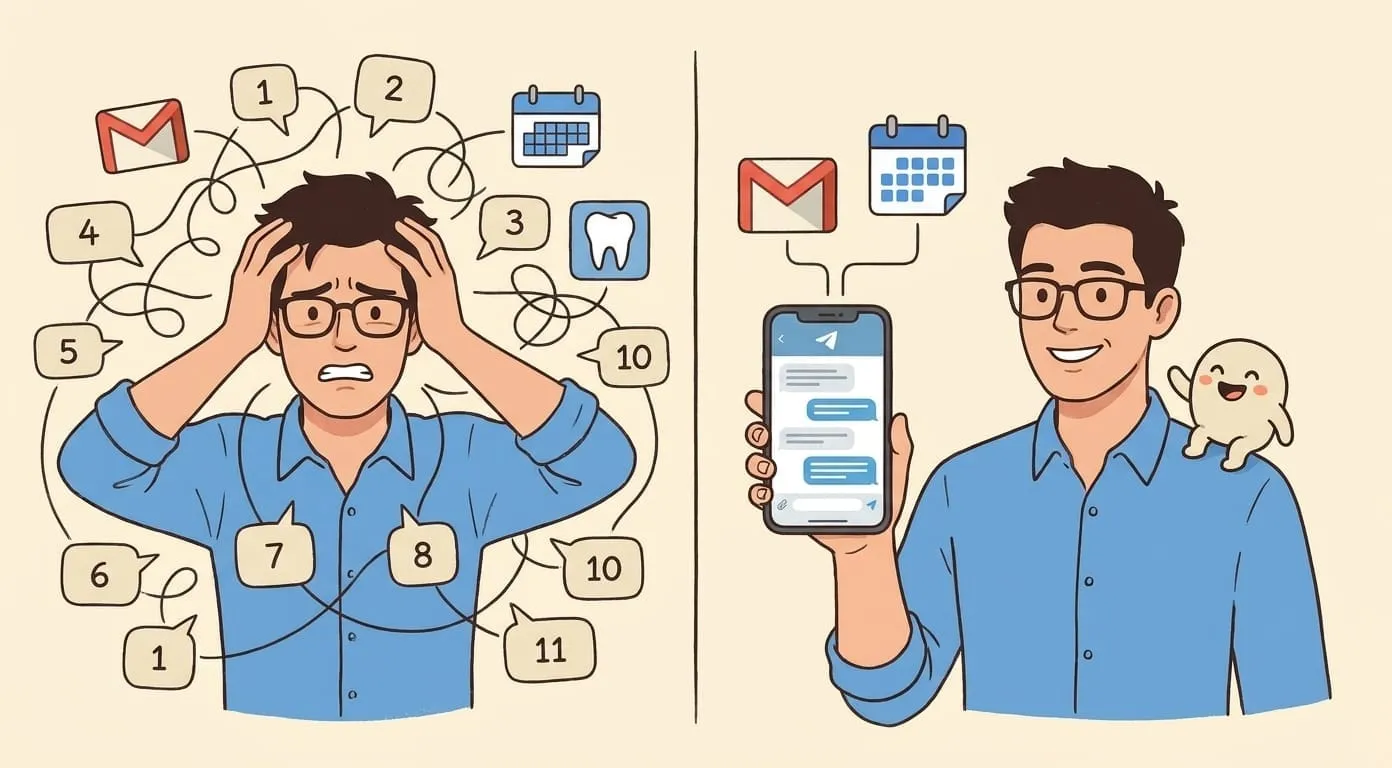
Here's what I see every week. A founder signs up for ChatGPT or Claude, plays with it for an afternoon, and declares that their company "uses AI." They paste in some customer emails, get decent replies, copy those replies back into Gmail, and feel modern.
That's not an AI agent. That's a fancy text box.
An agent doesn't wait for you to copy-paste context into it. An agent lives inside your workflow. It has memory of past conversations. It can pull files from your Google Drive, search the web, send messages on Slack, schedule tasks for next Tuesday, generate images for a campaign, push code to GitHub. It does these things because it understands your business context and has the tools wired up to act on it.
The difference between a chatbot and an agent is the difference between reading a recipe and having a cook in your kitchen.
Why generic AI tools hit a wall
I use ChatGPT. I use Claude's web interface. They're great for brainstorming, writing first drafts, answering technical questions. I'm not here to trash them.
But when a client needs an AI that can check their calendar, pull a report from Google Sheets, draft a summary, and send it to their team on Telegram before a Monday standup, a generic chatbot can't do that. It doesn't have access. It doesn't have persistent context. It doesn't know who "the team" is.
This is where Huang's thesis meets reality. Every company will need AI agents, sure. But not every company will build one from scratch. Most can't. The engineering cost is enormous: you need tool integrations, memory systems, security isolation, multi-channel delivery, billing, monitoring. You need all of it before you get a single useful agent interaction.
That's the problem we set out to solve with Amplify.
What we actually built
Amplify runs on OpenClaw, an open-source AI agent framework. I built it because I got tired of duct-taping APIs together every time someone needed an agent that could do more than chat.
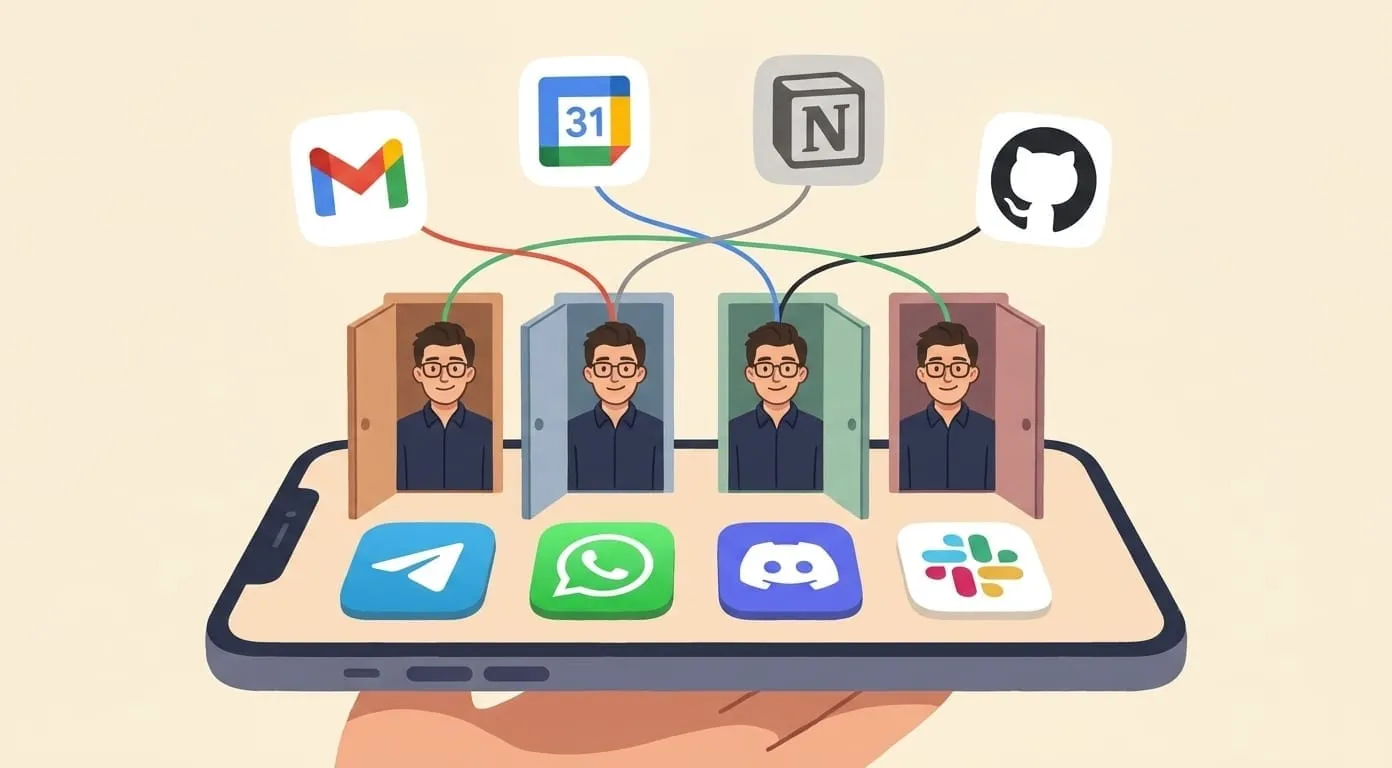
Here's the architecture in plain language. Each client gets their own isolated agent. Not a shared chatbot. Their agent has persistent memory, so it remembers your preferences, your project details, your team members' names. It carries context across conversations, across days, across weeks.
That agent has access to 32+ skills. Web search. Google Workspace (Docs, Sheets, Calendar, Drive, Gmail). Media generation. GitHub integration. Scheduled tasks. And more keep getting added.
The agent works across channels. You can talk to it on Telegram, WhatsApp, Discord, or Slack. Same agent, same memory, same skills. You pick the channel that fits your day.
Every client runs in a sandboxed environment. Your data doesn't touch another client's data. Your agent's memory is yours alone. This matters a lot more than people realize, especially when the agent has access to your email, your files, your calendar.
Why open source matters here
I could have built Amplify as a closed black box. Easier to protect, easier to monetize in the short term. I went the other direction.
OpenClaw is open source. Anyone can inspect the framework, contribute to it, or run it themselves. There are a few reasons I think this matters.
First, trust. When an AI agent has access to your Google account and your messaging apps, you should be able to see exactly how it handles that access. Closed systems ask you to trust a company. Open systems let you verify.
Second, speed. The agent ecosystem is moving fast. New models drop every few weeks. New tool APIs launch constantly. An open framework means the community catches integration opportunities I'd miss on my own.
Third, durability. Companies die. Products get acquired and shut down. If Amplify disappeared tomorrow (it won't, but hypothetically), your agent framework doesn't vanish with it. The code exists. That's a genuine advantage over proprietary agent platforms that lock you in.
The enterprise AI assistant question
Huang's framing tends to skew enterprise. He talks about corporations deploying fleets of agents across departments. That's valid. Big companies will absolutely do this.
But I think the more interesting near-term story is smaller teams. A marketing agency with 15 people. A SaaS startup with 8 engineers. A solo consultant juggling 12 clients. These are the people who feel the pain of context-switching most acutely, and they're the ones who benefit the most from an agent that actually knows their workflow.
A 15-person agency doesn't need Nvidia's DGX cluster. They need an agent that can draft a client proposal using last month's campaign results from Google Sheets, search for competitor pricing, generate social media visuals, and schedule a follow-up message to the client on WhatsApp. All from a single conversation.
That's what we built Amplify to do. The pricing reflects it too: $9.99 a month plus a usage wallet. You're not signing a six-figure enterprise contract. You're trying it on a real workflow next Tuesday.
Where Jensen Huang's vision gets complicated
I agree with the direction. AI agents are the future. Every company will use them. But the path from here to there has some real obstacles that the keynote stage tends to gloss over.
Reliability is one. Today's language models still hallucinate. They still occasionally misunderstand instructions in ways that range from annoying to costly. When your agent is just chatting, a hallucination is a minor inconvenience. When your agent is sending emails on your behalf or modifying a spreadsheet, a hallucination is a business problem. We handle this with confirmation steps for high-stakes actions and with skill-specific guardrails, but the industry as a whole hasn't solved this cleanly yet.
Integration complexity is another. Every SaaS product has its own API, its own auth flow, its own rate limits, its own quirks. Building and maintaining 32+ skill integrations is a full-time engineering effort. This is why most "AI agent" products on the market actually support three or four tools. Doing it properly is hard. You can see our full skill set at getamplify.team/skills if you're curious about what "properly" looks like.
User trust is the third. People are still nervous about giving an AI access to their accounts. Rightfully so. The security model has to be airtight (sandbox isolation, per-client environments, clear permission scopes), and the user has to understand it. This is a UX challenge as much as a technical one.
The real AI agent strategy for 2026
If you're a business leader trying to figure out your AI agent strategy, here's my honest advice. Stop thinking about AI agents as a future thing you'll adopt in 2028. The technology works now. Not perfectly, but well enough to save real hours on real workflows.
Start small. Pick one workflow that eats time every week: weekly reporting, client follow-ups, research tasks, content scheduling. Give that workflow to an agent. See what happens.
Don't build from scratch unless you have a strong engineering team and a very specific use case. Use an existing framework. OpenClaw is one option (obviously I'm biased). There are others. The point is that the infrastructure layer exists. You don't need to reinvent it.
Think about channels. Where does your team actually communicate? If everyone lives in Telegram, your agent should be there too. If it's Slack, same thing. An agent that requires you to log into a separate web app is an agent that won't get used.
Think about memory. The biggest unlock in agent AI isn't the language model itself. It's persistence. An agent that remembers your client list, your reporting format, your communication preferences, your project deadlines. That agent gets more useful every single week. An agent that starts fresh every conversation is basically a chatbot with extra steps.
Where this goes next
Huang is right about the trajectory. Within two years, I expect AI agents to be as common in business workflows as email. Not because of hype, but because the economics are overwhelming. An agent that saves a team five hours a week at $10 a month is an absurd ROI. The businesses that adopt early get a compounding advantage, because their agents accumulate context and get better over time.
The open question isn't whether AI agents will be everywhere. It's who builds the infrastructure they run on, and whether that infrastructure is open or locked behind a handful of big tech companies.
I'm betting on open. That's why OpenClaw exists. That's why Amplify is built the way it is. The agent revolution Huang keeps talking about shouldn't be controlled by three companies in San Francisco. It should be a platform anyone can build on, inspect, and trust.
If that sounds interesting, take a look at what we've built. Try it on a real problem. The gap between "AI sounds cool" and "my AI agent just handled that for me" is smaller than you think.
It's about a Tuesday afternoon of setup.
---
Yevhen builds Amplify, an AI agent platform on the OpenClaw framework. He writes about agents, infrastructure, and what actually works in production. Find Amplify at getamplify.team.*