OpenAI Unveils MRC Networking Protocol; Anthropic Taps SpaceX Data Center
OpenAI collaborates on a new networking protocol, Anthropic secures massive GPU capacity, and Google enhances Gemma model speed.
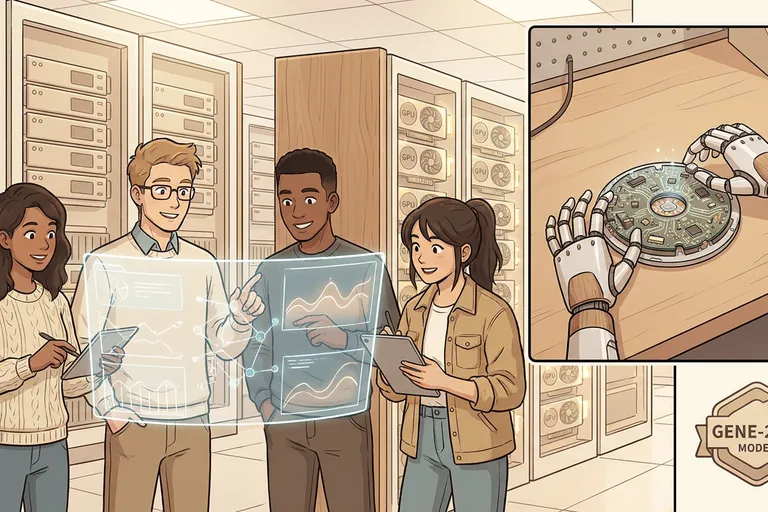
The AI landscape continues to evolve with advancements in infrastructure and model optimization. OpenAI is tackling supercomputer bottlenecks, Anthropic is expanding its compute resources, and Google is improving the efficiency of its open models. These developments are crucial for supporting the growing demands of AI development and deployment.
🤝 OpenAI Develops MRC Networking Protocol
OpenAI has partnered with AMD, Broadcom, Intel, Microsoft, and NVIDIA to create MRC, an open-source network protocol designed to optimize data transfer between GPUs in AI supercomputers (according to The Decoder). MRC enables data to be sent across hundreds of paths simultaneously, reducing the number of switch layers needed to connect over 100,000 GPUs from three or four to just two. This simplification cuts both power consumption and costs. The protocol is already operational on OpenAI's Stargate supercomputer. This collaborative effort addresses a critical bottleneck in AI infrastructure, paving the way for more efficient and powerful AI systems.
🚀 Anthropic Secures 220,000 GPUs at SpaceX's Colossus-1
Anthropic is set to utilize the full computing capacity of SpaceX's Colossus 1 data center, gaining access to over 220,000 NVIDIA GPUs and more than 300 megawatts of power (as reported by The Decoder). The data center is expected to be fully operational within a month. In addition to this infrastructure boost, Anthropic is doubling rate limits for Claude Code and significantly increasing API limits for Opus models. This expansion will enable Anthropic to scale its AI capabilities and provide enhanced services to its users.
⚡ Google Speeds Up Gemma 4 with Multi-Token Prediction
Google has introduced multi-token prediction drafters for its Gemma 4 open model family, resulting in a threefold increase in text generation speed (according to The Decoder). This enhancement involves a small auxiliary model that suggests multiple tokens at once, which the main model then validates in a single pass. This approach streamlines the text generation process, making Gemma 4 more efficient and responsive. The improvement allows developers to leverage the Gemma model family for faster and more interactive AI applications.
🔍 Google Updates AI Search with Community Insights
Google has updated its AI search functionality to include quotes and insights from Reddit and other web forums (according to TechCrunch). This update aims to provide users with more diverse and niche answers to their queries by incorporating expert advice and community discussions. By tapping into the collective knowledge of online communities, Google seeks to enhance the relevance and comprehensiveness of its search results. This integration could prove beneficial for users seeking specialized information or diverse perspectives.
🤖 Genesis AI Unveils GENE-26.5 Robotics Model
Genesis AI, a robotics startup backed by Khosla Ventures, has launched its first model, GENE-26.5, along with a demo showcasing robotic hands performing complex tasks (according to TechCrunch). The company raised a $105 million seed round to develop foundational AI for robotics. The demo highlights the potential of GENE-26.5 to enable robots to execute intricate movements and tasks. This development marks a significant step towards more advanced and capable robotic systems.
What this means: The AI industry is seeing significant advancements in both hardware and software. OpenAI's networking protocol addresses infrastructure bottlenecks, while Anthropic's access to substantial GPU resources enables further model development. Google's optimization of Gemma 4 and integration of community insights into search demonstrate a focus on efficiency and user experience.
These advancements indicate a continued push towards more powerful, efficient, and accessible AI technologies.
Sources
- •OpenAI built a networking protocol with AMD, Broadcom, Intel, Microsoft, and NVIDIA to fix AI supercomputer bottlenecks
- •Anthropic taps SpaceX's Colossus-1 data center for 220,000 GPUs to power Claude
- •Google speeds up Gemma 4 threefold with multi-token prediction
- •Google updates AI search to include quotes from Reddit and other sources
- •Khosla-backed robotics startup Genesis AI has gone full stack, demo shows