OpenAI and PwC Partner to Reimagine Finance Workflows with AI Agents
OpenAI collaborates with PwC to automate finance workflows, while Anthropic and OpenAI launch joint ventures for enterprise AI services, and Google enhances Gemini API with Webhooks.
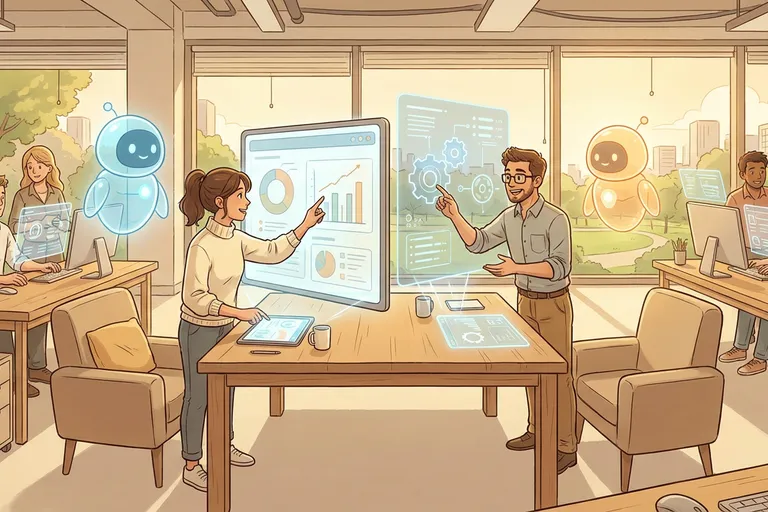
The AI landscape continues to evolve with strategic partnerships and innovative solutions designed to streamline business operations. OpenAI is collaborating with PwC to transform the finance sector, while both OpenAI and Anthropic are expanding their reach through joint ventures focused on enterprise AI adoption. Google is also enhancing its Gemini API with new features to improve developer workflows. These developments signal a growing emphasis on practical AI applications and enterprise-level solutions.
🤝 OpenAI and PwC Reimagine the CFO's Office
OpenAI and PwC have announced a collaboration to help enterprises leverage AI agents for automating finance workflows, enhancing forecasting accuracy, strengthening controls, and modernizing the CFO function (according to the OpenAI blog). This partnership aims to bring the power of AI to the core of financial operations, potentially leading to significant efficiency gains and improved decision-making. By integrating AI agents into finance processes, companies can streamline tasks, reduce manual effort, and gain deeper insights from their financial data. The collaboration highlights the growing recognition of AI's potential to transform traditional business functions.
🏢 Anthropic and OpenAI Launch Joint Ventures for Enterprise AI
Both Anthropic and OpenAI are expanding their enterprise AI offerings through strategic partnerships with asset managers (as reported by TechCrunch). These joint ventures aim to more aggressively market their AI products to businesses, indicating a shift towards broader enterprise adoption. Anthropic, Blackstone, Hellman & Friedman, and Goldman Sachs are launching a new AI services company to help mid-market businesses adopt Claude, while OpenAI has raised over $4 billion for a new joint venture called "The Deployment Company," according to Bloomberg. These initiatives reflect a growing consensus that selling AI requires more than just the technology itself; it requires comprehensive services and support to ensure successful implementation.
🚀 Google Enhances Gemini API with Event-Driven Webhooks
Google has announced the addition of Event-Driven Webhooks to the Gemini API, a push-based notification system designed to eliminate the need for inefficient polling (according to the Google AI Blog). This new feature reduces friction and latency for long-running jobs, providing developers with real-time updates and improving the overall efficiency of their workflows. By enabling event-driven notifications, developers can build more responsive and dynamic applications that react instantly to changes in the Gemini API. This enhancement underscores Google's commitment to providing developers with the tools they need to build innovative AI-powered solutions.
🍽️ DoorDash Adds AI Tools for Merchant Onboarding and Photo Editing
DoorDash has integrated new AI-powered tools to streamline merchant onboarding, enhance dish photos, and facilitate website creation (TechCrunch reports). These tools enable merchants to quickly onboard onto the platform, improve the visual appeal of their menu items, and establish an online presence. By leveraging AI, DoorDash aims to empower merchants with the resources they need to succeed in the competitive food delivery market. The addition of these AI-driven features reflects DoorDash's commitment to innovation and its focus on providing value to its merchant partners.
💡 Nvidia CEO Highlights AI's Job Creation Potential
Nvidia CEO Jensen Huang believes that AI is creating a significant number of jobs, countering concerns about job displacement (according to TechCrunch). Huang's perspective emphasizes the transformative potential of AI to drive economic growth and create new opportunities across various industries. As AI technologies continue to advance, there is a growing need for skilled professionals who can develop, deploy, and maintain these systems. Huang's remarks highlight the importance of investing in education and training to prepare the workforce for the AI-driven economy.
What this means: The AI industry is maturing, with companies focusing on practical applications and enterprise-level solutions. Strategic partnerships, such as OpenAI's collaboration with PwC and the joint ventures launched by Anthropic and OpenAI, are becoming increasingly common as companies seek to expand their reach and drive adoption. The integration of AI into existing platforms, as seen with DoorDash's new AI-powered tools, demonstrates the potential for AI to enhance efficiency and improve user experiences.
The industry continues to move towards practical applications and broader enterprise adoption, signaling a shift from theoretical possibilities to tangible results.
Sources
- •OpenAI and PwC collaborate to reimagine the office of the CFO
- •OpenAI’s cozy partner Cerebras is on track for a blockbuster IPO
- •Reduce friction and latency for long-running jobs with Webhooks in Gemini API
- •DoorDash adds AI tools to speed up merchant onboarding, edit photos of dishes
- •As workers worry about AI, Nvidia’s Jensen Huang says AI is ‘creating an enormous number of jobs’
- •Anthropic and OpenAI are both launching joint ventures for enterprise AI services