OpenClaw and Claude Agents Integrate with Google Home, Anthropic Unifies Claude Experience

Today's AI news highlights significant advancements in agentic AI, with OpenClaw and Claude integrating into Google Home, and Anthropic streamlining its Claude platform.
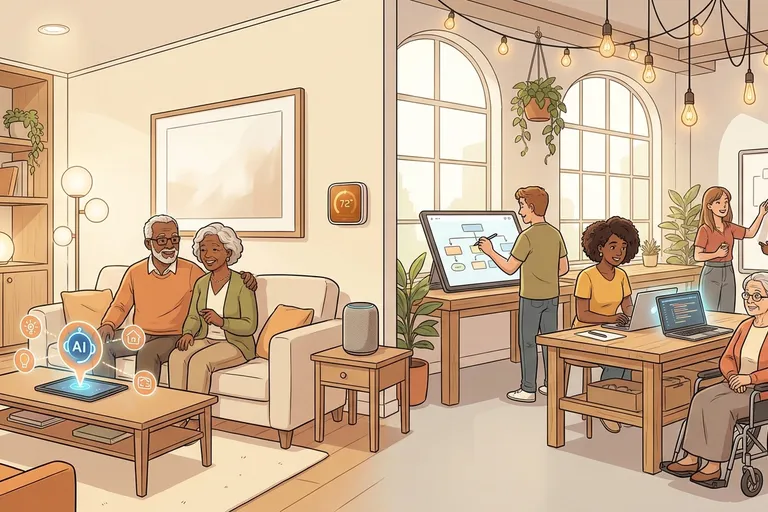
The AI landscape continues its rapid evolution, with today's news showcasing major strides in agentic AI and platform unification. From smart home integrations to streamlined user experiences, these developments underscore a growing trend towards more integrated and accessible AI.
🏡 OpenClaw and Claude Agents Now Control Google Home Devices
Google is opening its smart home ecosystem to third-party AI agents, including OpenClaw and Claude, through its new Model Context Protocol (MCP). This integration allows these AI agents to securely control connected devices, review camera summaries, and access smart home activity using natural language, as reported by The Verge AI and TechCrunch AI [20, 21]. Taylor Lehman, group product manager at Google Home & Nest, stated that Home MCP allows any AI agents supporting MCP to work with devices and event history in the Google Home ecosystem. This move signifies a major step towards more intelligent and automated smart homes, enabling users to leverage advanced AI capabilities for managing their environments.
✨ Anthropic Merges Claude Chat and Cowork into a Unified Experience
Anthropic has announced a significant update to its Claude platform, merging Claude Chat and Cowork into a single, unified product, according to The Decoder and TechCrunch AI [22, 24]. This change means users no longer need to choose between interfaces; Claude will intelligently determine whether a task requires a quick answer or a more extensive workflow. The update also introduces Claude Docs and Claude Slides, allowing users to create documents and presentations directly within the chat interface, as detailed by The Verge AI [23]. These new features are initially available to Pro and Max plan subscribers, aiming to streamline productivity and enhance the user experience by making all AI tools accessible from any conversation.
💰 Treble Secures $18 Million for Voice Simulation Platform
Iceland-based Treble has successfully raised $18 million for its advanced voice simulation platform, as reported by TechCrunch AI [1]. Treble's technology is utilized by developers of voice AI models, as well as companies in the AI wearable and robotics sectors. This funding round underscores the increasing demand for sophisticated voice AI solutions across various industries, enabling more realistic and versatile voice interactions in a growing number of applications. The investment will likely fuel further innovation in voice synthesis and its integration into cutting-edge AI products.
🧠 Google DeepMind Establishes Interdisciplinary Institute for AGI Research
Google DeepMind has founded the DeepMind Institute (DMI), an interdisciplinary research platform dedicated to tackling fundamental questions surrounding Artificial General Intelligence (AGI), according to The Decoder [18]. Led by Demis Hassabis, Shane Legg, and James Manyika, the institute will bring together experts from the arts, humanities, and policy alongside technologists. The DMI's focus includes critical areas such as safety, governance, and control risks associated with AGI development. This initiative highlights a proactive approach to understanding and guiding the responsible development of advanced AI systems.
📚 OpenAI and AARP Partner to Offer AI Workshops for Older Adults
OpenAI is collaborating with AARP to provide free, hands-on ChatGPT workshops to 1,000 older adults across 10 U.S. cities, as announced on the OpenAI Blog [26]. The program aims to equip participants with practical AI skills, enabling them to safely and effectively integrate AI into their everyday lives. This initiative demonstrates a commitment to broader AI literacy and accessibility, ensuring that diverse demographics can benefit from and engage with emerging AI technologies.
The direction is clear: AI is moving towards greater practical application and broader accessibility, with a continued focus on responsible development.
Sources
- •Iceland-based Treble raises $18 million for its voice simulation platform (TechCrunch AI)
- •Google will now let any AI agent run your smart home (The Verge AI)
- •Your AI agents can now control your Google Home devices (TechCrunch AI)
- •Anthropic merges Claude Chat, Cowork, and more into a single product (The Decoder)
- •Claude comes for Gemini with its own take on Docs and Slides (The Verge AI)
- •Anthropic merges Claude chat and Cowork in one interface (TechCrunch AI)
- •Google Deepmind launches interdisciplinary institute to tackle the big questions around AGI (The Decoder)
- •Helping older adults use AI in everyday life (OpenAI Blog)