Nvidia Unveils Real-time Speaker Diarization Model, OpenAI Eyes GPT-7 and Beyond

Today's AI news highlights Nvidia's new speaker identification model, OpenAI's long-term research focus, and the growing role of AI agents in model development.
The AI landscape continues its rapid evolution, with significant advancements in model capabilities and strategic shifts in research priorities. From real-time audio analysis to the future of large language models, today's news underscores the industry's drive towards more sophisticated and integrated AI solutions.
🔊 Nvidia Launches Nemotron 3 Diarization
Nvidia has released Nemotron 3 Diarization, a new AI model capable of identifying up to eight speakers in real-time conversations. This 100-million-parameter model is designed to pinpoint who is speaking at any given moment, offering a powerful tool for various applications requiring precise speaker attribution. The model is available for free, according to The Decoder [14]. This development enhances the ability to process and understand complex audio interactions, paving the way for more intelligent voice-activated systems and meeting transcription services.
🚀 OpenAI's Long-Term Vision: GPT-7 and Beyond
OpenAI is heavily investing in the future, with 80 to 90 percent of its research efforts already targeting GPT-7, GPT-8, and subsequent generations of its large language models. Boris Power, OpenAI's Head of Applied Research, emphasized that improvements within a single generation are considered short-term bets. As reported by The Decoder [16], Power believes that the biggest challenge isn't model performance, but rather user understanding of AI's potential. This strategic focus indicates a commitment to pushing the boundaries of AI capabilities far into the future.
🤖 AI Agents Drive Model Development, Human Oversight Remains Key
AI agents are increasingly contributing to the model development process, with a research team analyzing 769 task logs finding that agents supplied up to 55 percent of method proposals. However, human decision-making remains paramount, as humans made over 85 percent of the final decisions, according to The Decoder [10]. The study also noted that a third of the tasks would not have been attempted without AI assistance. This highlights a collaborative future where AI agents augment human researchers, accelerating innovation while maintaining critical human oversight.
💡 Engram: AI-Powered Experimental Music Sampler
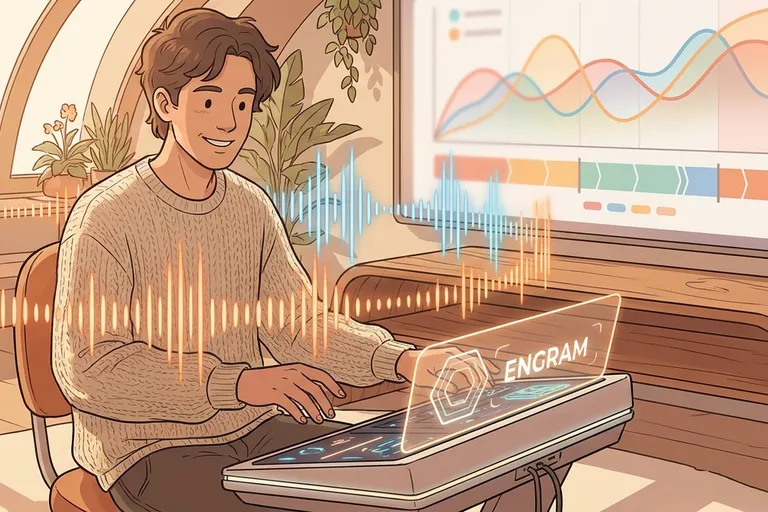
Music startup Thoughtful Things has launched a Kickstarter campaign for Engram, a sampler and groovebox that uses AI to manipulate audio and generate new sounds. As reported by The Verge AI [4], Engram is not designed for mainstream music production but rather for creating experimental and uncanny sounds by pushing AI audio models to their limits. The device runs a custom-trained, local "tiny AI" model and is not connected to the internet, offering a unique approach to AI-driven musical creativity.
📈 Goldman Sachs Forecasts Trillion-Dollar AI Infrastructure Investment
Goldman Sachs projects that major tech companies—Amazon, Alphabet, Microsoft, Oracle, and Meta—will collectively invest a staggering $1.2 trillion in AI infrastructure by 2027. This figure significantly surpasses current Wall Street estimates, representing more than a 50 percent increase from this year's levels. The Decoder [18] notes that this investment, when measured against GDP, would constitute the largest investment cycle since 19th-century railroad construction, though potential bottlenecks in power, labor, and memory chips could influence the pace.
The trajectory of AI development continues to point towards deeper integration across industries and a relentless pursuit of advanced capabilities.
Sources
- •Nvidia drops a free 100M-parameter model that identifies up to eight speakers in real time (The Decoder)
- •OpenAI says 80 to 90 percent of its research already targets GPT 7 and beyond (The Decoder)
- •AI agents do more of the work in model development, but humans still make the decisions (The Decoder)
- •Engram is a sampler that turns broken AI hallucinations into music (The Verge AI)
- •Goldman Sachs expects Big Tech to spend $1.2 trillion on AI infrastructure by 2027, dwarfing Wall Street estimates (The Decoder)